
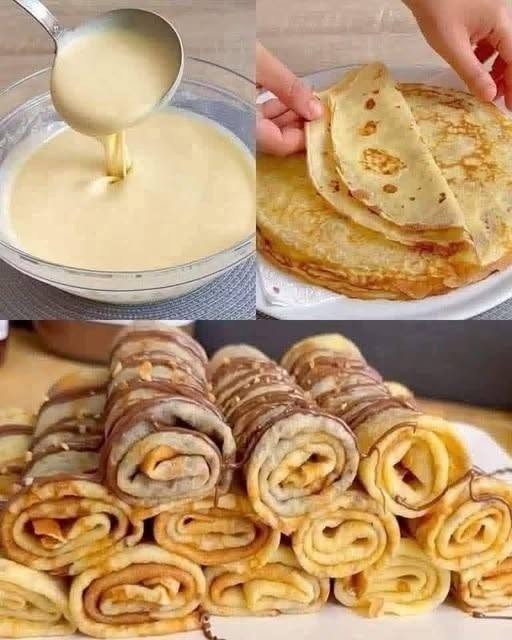
Recipe Description
These soft homemade crepe rolls are thin, tender, lightly golden, and incredibly easy to make with everyday ingredients. The batter comes together in just a few minutes, then the crepes are cooked one by one in a lightly greased skillet before being folded or rolled into beautiful little spirals.
They are soft enough to roll without cracking, with delicate golden edges and a tender centre. You can enjoy them plain, dusted with powdered sugar, filled with whipped cream and fruit, spread with Nutella or peanut butter, or served with honey, jam, or condensed milk.
This versatile recipe works wonderfully for breakfast, brunch, dessert, afternoon tea, or a quick sweet snack. The batter can also be adjusted to make the crepes more savoury by reducing or removing the sugar and adding herbs or spices.
The secret to beautiful crepes is making a smooth, lump-free batter and cooking the pancakes in a properly heated nonstick skillet. Once you get the pan temperature right, each crepe cooks in only a minute or two.
Servings
Makes: 12–14 crepes
Servings: 4–6
Prep Time: 10 minutes
Resting Time: 15–20 minutes
Cook Time: 20–25 minutes
Total Time: About 45–55 minutes
Difficulty: Easy
Course: Breakfast, Brunch, Snack, or Dessert
Ingredients
For the Crepe Batter
2 cups all-purpose flour
2 large eggs
2 cups milk
1/2 cup water
2 tablespoons granulated sugar
1 teaspoon vanilla extract
1/4 teaspoon salt
2 tablespoons melted butter or neutral oil
Extra butter or oil for greasing the pan
For Serving
Powdered sugar
Honey
Maple syrup
Jam
Chocolate spread
Fresh berries
Banana slices
Whipped cream
Condensed milk
Cinnamon
Instructions
1. Prepare the Batter
Add the eggs to a large mixing bowl.
Whisk until the yolks and whites are fully combined.
Add the milk, water, sugar, vanilla extract, salt, and melted butter.
Whisk again until everything is well combined.
Gradually add the flour while whisking continuously.
This gradual addition helps prevent large lumps from forming.
Continue whisking until you have a smooth, thin batter.
The consistency should be noticeably thinner than traditional pancake batter. It should pour easily from a ladle or measuring cup.
If the batter seems too thick, add 1–2 tablespoons of milk or water until you reach the desired consistency.
2. Strain the Batter
For especially smooth crepes, pour the batter through a fine-mesh sieve into another bowl.
This step removes any remaining lumps and creates a silky batter that spreads easily across the pan.
Although optional, straining the batter can make a noticeable difference in the final texture.
3. Rest the Batter
Cover the bowl and allow the batter to rest for 15–20 minutes.
Resting gives the flour time to fully absorb the liquid and helps produce softer, more flexible crepes.
This also reduces some of the bubbles created during whisking.
If you’re preparing the batter in advance, it can be refrigerated for several hours.
4. Heat the Pan
Place a nonstick skillet or crepe pan over medium heat.
Lightly grease the surface with butter or a small amount of oil.
Allow the pan to heat evenly.
The pan should be hot enough for the batter to begin setting immediately but not so hot that the bottom becomes dark before the top cooks.
A moderate, steady temperature is ideal.
5. Cook the First Crepe
Give the batter a quick stir.
Pour approximately 1/4 cup of batter into the centre of the hot pan.
Immediately tilt and rotate the pan so the batter spreads into a thin, even layer.
Try to work quickly because the batter begins setting as soon as it touches the hot surface.
Cook for approximately 45–60 seconds.
You should notice the edges becoming slightly dry and beginning to lift from the pan.
Small bubbles may appear across the surface.
6. Flip the Crepe
Carefully slide a thin spatula underneath the crepe.
Flip it gently.
Cook the second side for approximately 20–30 seconds.
The second side usually requires much less cooking because the crepe is already mostly set.
Transfer the finished crepe to a plate.
7. Continue Cooking
Repeat with the remaining batter.
Lightly grease the skillet only when necessary. Too much butter or oil can create uneven browning.
Stack the finished crepes on a plate.
The warmth from the stack helps keep them soft and flexible.
8. Roll the Crepes
Once the crepes are cooked, you can roll them into attractive spirals.
Place one crepe flat on a clean surface.
If desired, spread a very thin layer of chocolate spread, jam, honey, peanut butter, or condensed milk across the surface.
Roll the crepe tightly from one edge to the other.
Place the seam underneath.
For the rolled appearance shown in the recipe concept, cut some crepes into shorter sections or leave them whole depending on how you want to serve them.
Arrange the rolls together on a serving platter.
9. Finish and Serve
Dust the rolled crepes with powdered sugar.
Add fresh berries, banana slices, whipped cream, chocolate drizzle, honey, or condensed milk.
For a simple finish, sprinkle with cinnamon and serve warm.
Recipe Notes
The batter should be thin enough to spread quickly across the pan. If it resembles normal pancake batter, it is probably too thick.
If your first crepe is too thick, add a little more milk or water to the batter.
If it tears easily, allow the batter to rest longer or add a small amount of flour.
The first crepe is often the least attractive because it helps you determine the correct pan temperature and batter quantity.
Avoid pressing the crepes down with the spatula while they cook.
The goal is a soft, flexible crepe rather than a thick, fluffy pancake.
Helpful Tips
Use a good-quality nonstick pan for the easiest results.
Keep the heat at medium rather than high.
Use the same amount of batter for every crepe for consistent size and thickness.
A 1/4-cup measuring cup is useful for portioning the batter.
Swirl the pan immediately after adding the batter.
Do not wait for the batter to spread by itself.
Keep finished crepes covered with a clean kitchen towel so they remain soft.
If the edges become too crispy, lower the heat slightly.
If the crepe sticks to the pan, the skillet may not be hot enough or it may need a very light coating of butter.
How to Make Extra-Soft Crepes
For especially soft crepes, avoid overcooking them.
The edges should be lightly golden rather than dark brown.
You can also replace some of the water with additional milk.
Adding a small amount of melted butter to the batter helps keep the texture tender.
Stacking the crepes while they’re warm also helps them remain soft.
For an extra delicate texture, use half all-purpose flour and half cake flour.
Sweet Filling Ideas
Chocolate Banana
Spread chocolate hazelnut spread over the crepe and add thin banana slices.
Roll tightly and dust with powdered sugar.
Strawberry Cream
Spread whipped cream over the crepe and add sliced strawberries.
Roll and top with powdered sugar.
Cinnamon Sugar
Brush the warm crepe lightly with melted butter.
Sprinkle with cinnamon and sugar.
Roll and serve warm.
Honey Nut
Drizzle honey over the crepe and add chopped walnuts or almonds.
Apple Cinnamon
Add thinly sliced cooked apples with cinnamon and a small amount of brown sugar.
Savoury Variation
This recipe can easily be converted into savoury crepes.
Reduce the sugar to 1 teaspoon or omit it completely.
Leave out the vanilla.
Add a pinch of black pepper and your favourite herbs.
Fill with cooked chicken, cheese, mushrooms, spinach, scrambled eggs, or vegetables.
Fold into triangles or roll into wraps.
These savoury crepes are excellent for breakfast, lunch, or a light dinner.