
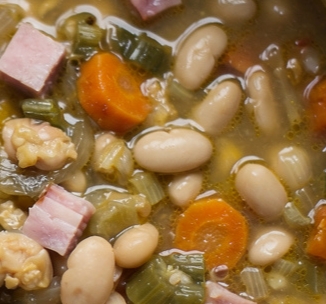
A Hearty Classic: Beans & Ham
On a Tuesday night when the temperature has dropped and you need something that actually fills people up, this is the pot to reach for. Beans and ham has been on American tables for generations, and for good reason – it is cheap, it practically cooks itself, and it tastes like you spent more effort than you did. One pot, a handful of pantry ingredients, and about two hours of mostly hands-off simmering gets you a meal that feels genuinely satisfying.
This version uses Great Northern beans, diced cooked ham, and a short list of vegetables that you probably already have. The smoked paprika does quiet but important work here, adding a faint smokiness that rounds out the whole pot. If you have had leftover ham sitting in your fridge after the holidays, this is exactly where it should go.
Gather Your Ingredients for Beans & Ham
Here is everything you need before you start:
- 1 lb dried great northern beans, rinsed
- 1 lb cooked ham, diced
- 1 small onion, chopped
- 2 carrots, diced
- 2 celery stalks, diced
- 3 cloves garlic, minced
- 6 cups chicken broth
- 1 tsp dried thyme
- 1 tsp smoked paprika
- 1/2 tsp black pepper
- 1 bay leaf
- Salt, to taste
- 2 tbsp olive oil
Dice your vegetables before you turn on the heat. The active cooking at the beginning moves quickly, and you do not want to be chopping carrots while your onions are already starting to brown.

Step-by-Step: Cooking Beans & Ham to Perfection
Heat 2 tbsp of olive oil in a large pot over medium heat. Add the onion, carrots, and celery and saute for 5-7 minutes. You are looking for the onion to turn translucent and the vegetables to soften slightly at the edges. Add the minced garlic and cook for one more minute, stirring so it does not burn. Burnt garlic will make the whole pot bitter.
Add the rinsed beans, diced ham, chicken broth, thyme, smoked paprika, black pepper, and bay leaf. Bring everything to a boil, then reduce the heat, cover the pot, and simmer for 1 1/2 to 2 hours. Stir the pot every 20-30 minutes. If the liquid drops below the level of the beans, add a splash of water or extra broth.
The beans are done when they are fully tender with no chalky center. Press one against the side of the pot with a spoon – it should give easily. Remove the bay leaf, taste the broth, and add salt as needed. Ham varies a lot in saltiness, so always taste before you season.
Serve hot with warm cornbread or crusty bread on the side.
Choosing the Best Beans and Ham for Your Dish
About the beans: Great Northern beans are the right call for this recipe. They are medium-sized, hold their shape reasonably well through a long simmer, and have a mild, slightly nutty flavor that works with the smoky ham. Navy beans are smaller and will break down more, giving you a thicker, creamier pot – not a bad result, just a different texture. Cannellini beans are larger and creamier, and they are a fine swap if that is what you have. All three are white beans and will work in this Classic Ham and Beans recipe, but the texture of the finished dish will vary.
About the ham: Diced cooked ham from the store is convenient and works well here. But if you want deeper flavor, consider using a ham hock or a leftover ham bone instead of, or in addition to, the diced ham. A ham hock simmers in the pot for the full cook time, releasing collagen that thickens the broth and a smoky, rich flavor you cannot get from pre-diced ham. If you go that route, pull the hock out at the end, shred any meat from the bone, and stir it back in. Ham and Beans with Ham Hock is a more traditional Southern preparation, and the broth will be noticeably richer.
For a vegetarian version, smoked tofu or a plant-based ham alternative can stand in for the meat. Use vegetable broth in place of chicken broth, and add an extra 1/2 tsp of smoked paprika to compensate for the missing smokiness.
Tips for Enhancing Flavor and Texture
Make it a day ahead. This is one of those dishes that genuinely improves overnight. As the beans cool in the broth, they absorb more liquid and the whole pot thickens. The flavors meld in a way they simply do not on the day of cooking. If you have the time, make your White Beans and Ham the evening before, refrigerate it, and reheat it for dinner the next night.
To thicken the broth: Mash about 1/4 of the beans against the side of the pot with the back of a spoon and stir them in. This is the simplest way to get a thicker, creamier consistency without adding anything extra.
Slow cooker option: Slow Cooker Ham and Beans is an easy variation. Complete the saute step on the stovetop, then transfer everything to a slow cooker. Cook on low for 7-8 hours or on high for 4-5 hours, until the beans are tender. This is a good option if you want to set it up before work.
Do not salt early. Wait until the beans are fully cooked before adding salt. Salt added too early can toughen bean skins and slow down cooking.

Serving Suggestions and Perfect Pairings
Warm cornbread is the classic pairing and for good reason – it soaks up the broth well and the slight sweetness balances the smoky, savory pot. A thick slice of crusty sourdough or a simple dinner roll works just as well on a weeknight.
A simple green salad on the side keeps the meal from feeling too heavy. Collard greens or steamed cabbage are traditional Southern sides that fit naturally alongside Easy Ham and Beans.
If you are cooking for a crowd or want to stretch the meal further, serve the beans over white rice. The rice absorbs the broth and turns this into something closer to a stew over grains.
If you enjoy cooking with ham in other formats, this Healthy Breakfast Casserole With Ham And Cheese is a good use for any leftover diced ham you have from this recipe.
Storing Leftovers and Reheating Tips
Let the pot cool to room temperature before transferring to storage containers. Store in an airtight container in the refrigerator for up to 4 days. According to FoodSafety.gov, cooked bean dishes should be refrigerated within 2 hours of cooking to stay safe.
The beans will absorb more broth as they sit, so the leftovers will be thicker than the freshly made pot. When reheating, add a splash of water or chicken broth and warm gently over low heat on the stovetop, stirring occasionally. The microwave works too – cover loosely and heat in 90-second intervals, stirring between each.
This dish freezes well. Portion it into freezer-safe containers and freeze for up to 3 months. Thaw overnight in the refrigerator before reheating.
Frequently Asked Questions About Beans & Ham
Do I need to soak the beans before cooking?
For this recipe, no. The beans simmer for 1 1/2 to 2 hours, which is enough time to cook them through without soaking. If you do soak them overnight, they will cook faster – check for tenderness around the 45-minute mark. Soaking also reduces some of the compounds that cause digestive discomfort for some people, so it is worth doing if that is a concern for your household.
What’s the best type of ham to use for this dish?
Diced cooked ham from the store is the easiest option and works well. A ham hock or leftover ham bone will give you a richer, more deeply flavored broth. If you use a bone, add it at the same time as the beans and broth, then remove it at the end and shred any meat back into the pot.
Can I use canned beans instead of dried beans?
Yes. Use two 15-ounce cans of Great Northern beans, drained and rinsed. Because canned beans are already fully cooked, reduce the simmering time to 30-40 minutes – just long enough to let the flavors come together. The texture will be slightly softer than dried beans cooked from scratch.
How can I make my ham and beans thicker?
The simplest method is to mash about 1/4 of the beans directly in the pot using the back of a spoon or a potato masher, then stir them into the broth. You can also remove a cup of beans, blend them with a little broth, and stir the puree back in. Cooking the pot uncovered for the last 20 minutes also helps the liquid reduce and thicken naturally.
What are some good side dishes to serve with Beans & Ham?
Cornbread is the most natural pairing. Crusty bread, dinner rolls, steamed collard greens, coleslaw, and white rice all work well. A simple green salad rounds out the meal without competing with the flavors of the pot.
How long do leftovers last and how should I store them?
Stored in an airtight container in the refrigerator, leftovers will keep for up to 4 days. For longer storage, freeze in portioned containers for up to 3 months. Always reheat to an internal temperature of 165 degrees F before serving. Add a splash of broth or water when reheating, since the beans will have absorbed most of the liquid during storage.