
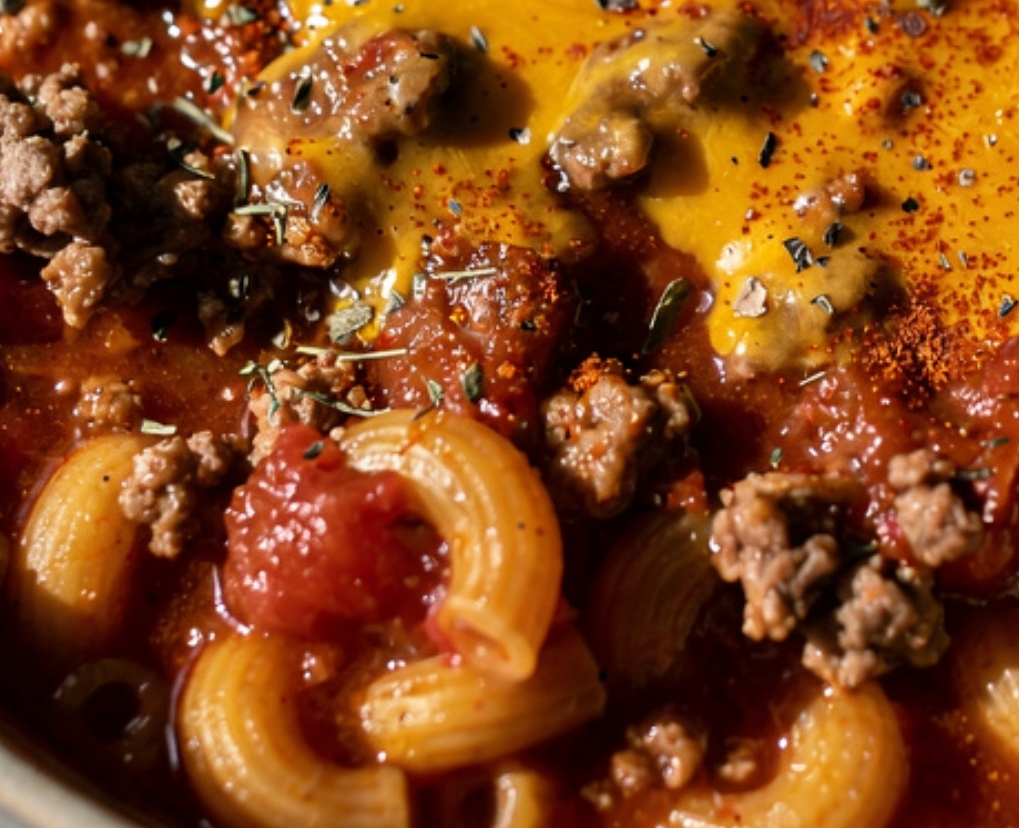
What is American Goulash Skillet?
Monday night, everyone is tired, and nobody wants to wash four pans. This is the meal for that night. A good skillet goulash recipe is one of those dinners that has quietly fed American families for generations under different names depending on where you grew up. In the Midwest it shows up as Johnny Marzetti. In New England it goes by American Chop Suey. In the South it is just goulash. Whatever your family called it, the idea is the same: ground beef, macaroni, and a tomato-based sauce all cooked together until the pasta absorbs the broth and everything becomes one cohesive, satisfying dish.
This version is not Hungarian goulash, which is a slow-cooked beef stew built around paprika and often served over egg noodles or dumplings. American goulash is its own thing entirely – a quicker, heartier pasta dish that came together in home kitchens as a practical way to stretch ground beef and feed a crowd. It is comfort food in the truest sense: filling, inexpensive, and genuinely good.
Essential Ingredients for Your Goulash
You do not need anything special for this dish, which is part of why it works so well as a weeknight dinner. Here is what to know about each component before you start.
- Ground beef: One pound feeds six people here because the macaroni does a lot of the work. An 80/20 blend gives you the most flavor. If you are watching the budget, buy the larger family pack and freeze what you do not use – ground beef freezes well and the price per pound is almost always lower in bulk.
- Canned tomatoes: The recipe uses both diced tomatoes and tomato sauce, plus tomato paste for depth. Store-brand canned tomatoes are genuinely fine here. They all come from the same handful of packing facilities, and the price difference between store brand and name brand can be significant over time. If you only have whole canned tomatoes on hand, crush them by hand directly into the pot, removing any tough stem pieces as you go. The texture you get from hand-crushed tomatoes is a little more irregular and interesting than pre-diced.
- Tomato paste: Two tablespoons might seem like a small amount, but tomato paste is concentrated flavor. It adds a richness that the sauce and diced tomatoes alone cannot provide.
- Beef broth: This is the liquid the macaroni cooks in. It keeps the dish from tasting flat. Low-sodium versions work well if you prefer to control the salt level yourself.
- Spices – paprika and Italian seasoning: Before you add the liquid, consider toasting the paprika and garlic in the hot pan for about a minute after draining the fat. Dry heat opens up the oils in spices and you will notice a noticeably deeper, more rounded flavor in the finished dish. Do not skip this step if you have an extra 60 seconds.
- Elbow macaroni: Store-brand pasta is one of the best budget swaps in the kitchen. It cooks the same way and costs a fraction of name brands. Two cups is the right amount – enough to make the dish hearty without soaking up so much liquid that it becomes dry.
- Cheddar cheese: Sharp cheddar gives you the most flavor for your money. Shred it yourself from a block if you can – pre-shredded cheese contains anti-caking agents that can make it slightly less smooth when it melts.
Step-by-Step: How to Make Skillet Goulash
This comes together in one pot from start to finish. Use the largest pot you have – a Dutch oven or a deep, wide pot works best because you need room for the macaroni to cook evenly.
- Brown the beef. Add the ground beef, diced onion, and minced garlic to the pot over medium-high heat. Break the beef up as it cooks. You are looking for no pink remaining and some light browning on the meat, which adds flavor. Drain the excess fat once the beef is cooked through. If you want to toast the spices, add the paprika and garlic back into the hot, drained pan and stir for about 60 seconds until fragrant before moving to the next step.
- Build the sauce. Stir in the beef broth, tomato sauce, diced tomatoes, tomato paste, Worcestershire sauce, Italian seasoning, paprika (if you did not toast it in the previous step), salt, and black pepper. Stir everything together so the tomato paste is fully dissolved into the liquid. Taste the sauce at this point and adjust salt if needed.
- Add the macaroni. Bring the mixture to a steady simmer, then pour in the dry elbow macaroni. Stir it in so it is submerged in the liquid. Do not add the pasta before the liquid is simmering or it will sit in cold liquid and cook unevenly.
- Cover and cook. Put a lid on the pot and let it cook for 12 to 15 minutes, stirring every few minutes to keep the pasta from sticking to the bottom. The macaroni is done when it is tender and has absorbed most of the surrounding liquid. If it looks too dry before the pasta is fully cooked, add a splash of broth. If it looks too wet once the pasta is done, let it cook uncovered for a couple of minutes.
- Stir in the cheese. Take the pot off the heat. Add the shredded cheddar and stir until it melts into the dish. Removing it from the heat first prevents the cheese from breaking or becoming grainy.
Tips, Tricks, and Delicious Variations
Once you have made this once, you will know where to take it based on what your family likes. Here are the adjustments that actually make a difference.
- For a creamier result: Stir in 1/2 cup of sour cream along with the cheddar at the end. It adds a slight tang and makes the sauce noticeably richer and smoother. This is one of the easiest ways to make the dish feel more indulgent without adding much effort.
- Add vegetables: Bell peppers, frozen corn, or zucchini all work well. Add firmer vegetables like peppers at the same time as the onion. Add softer vegetables or frozen corn in the last few minutes of cooking so they do not turn to mush.
- Adjust the heat level: A pinch of red pepper flakes or a teaspoon of chili powder added when you toast the spices gives the dish a gentle warmth without making it spicy. If you do add chili powder, toast it the same way you would the paprika – 60 seconds in a dry hot pan before the liquid goes in.
- Make it stretch further: If you need to feed more people, add another half cup of macaroni and an extra cup of broth. The dish scales up easily.
- Ground turkey swap: Ground turkey works as a substitute if you prefer it. The dish will be lighter in color and slightly leaner. Use the same quantities.
Serving Your Comforting Goulash
This is a complete meal on its own – protein, starch, and tomato sauce all in one bowl. That said, a few simple sides make it feel more rounded.
- A green salad with a sharp vinaigrette cuts through the richness nicely.
- Garlic bread or a simple crusty loaf is good for scooping up the sauce at the bottom of the bowl.
- Steamed green beans or broccoli on the side adds color and keeps things feeling balanced.
- A dollop of sour cream on top of each serving, even if you did not stir it into the pot, is a finishing touch that works well.
Serve it straight from the pot at the table. This is not a dish that benefits from being plated carefully. Pile it into bowls and eat it while it is hot.
Storing and Reheating American Goulash
Leftovers are genuinely good, which makes this a useful dish to cook once and eat twice. Let the goulash cool to room temperature before transferring it to an airtight container. Store it in the refrigerator for up to 4 days.
When you reheat it, the macaroni will have absorbed more liquid overnight and the dish will be thicker than when you first made it. Add a splash of beef broth or water – a few tablespoons is usually enough – and warm it gently over medium-low heat, stirring as it heats through. The microwave works too; cover the bowl loosely and heat in 90-second intervals, stirring between each one.
For freezing, portion the cooled goulash into freezer-safe containers or zip-top bags. It keeps well for up to 3 months. Thaw it overnight in the refrigerator before reheating. The pasta texture will be slightly softer after freezing, but the flavor holds up well.